They came into the ED early in the morning. Before most of us have had our first cup of coffee. Their SUV had traveled at least 500 yards off the freeway by the EMT's estimate, rolling countless times. Neither had been thrown from the vehicle, although no one knew how, since the couple reported that seat belts were a distant afterthought for them. 22 and 23 years old, too young to spend a sunny January morning being extricated from a severely crippled automobile.
"I don't know how it happened," she told me. A typical response after a violent car accident. It usually takes time to process what happened. The EMTs and firefights who brought them in had some idea of what caused the crash. "See that bruising on her mid-thigh," an EMT said to me, "that's not from her seatbelt, that's from her jeans. They were halfway down when we found them in the car." "Seriously!?" I replied. "Yup, and her boyfriend here either forgot to get dressed before he left the house this morning, or some serious hanky-panky was going on in that SUV when they lost control, because he was totally naked when we arrived on-scene."
I tried to control my laughter, but it was a losing battle. Just moments before I had felt the unfairness of the situation; a young couple injured in a terrible auto accident. But as the real reason for the crash sunk in, the humor of the situation hit me and I had to leave the room so that the patients didn't see me laughing. Had their injuries been more severe, I would have felt guilty about my laughing at their situation. Inexplicably they sustained only minor cuts and abrasions, but left the hospital that day with severe bruising to their egos.
Wednesday, January 03, 2007


Monday, December 04, 2006
Top 10 Reasons to Date an X-ray Tech
1. We do our best work in the dark
2. We can see through your clothes
3. We know all the positions
4. We are well developed
5. The chemistry is always right
6. We know what buttons to push
7. We have all the right techniques
8. We know how to warm up a tube
9. We know how to get the best penetration
10. When you need it now, we make it wet.
Thanks to Kristen from Kristen's Chronicles for the list.
2. We can see through your clothes
3. We know all the positions
4. We are well developed
5. The chemistry is always right
6. We know what buttons to push
7. We have all the right techniques
8. We know how to warm up a tube
9. We know how to get the best penetration
10. When you need it now, we make it wet.
Thanks to Kristen from Kristen's Chronicles for the list.
Monday, November 27, 2006
New Rad Links
 Hi Folks! I've recently been alerted to some really useful websites relating to radiography and radiology. Links to these sites are below and have also been added to the side bar.
Radiology Ramblings
Dave's Places in Radiology
Dave's Radiology Student's Page
Please take a minute to check these sites out. They have tons of useful information for Rad Techs, Rad Tech students and Rad Tech students-to-be!
Wednesday, November 22, 2006
Happy TG
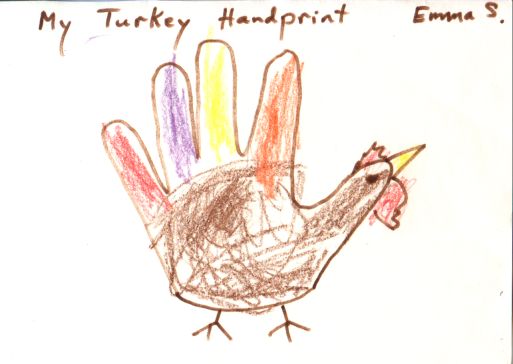
Happy Thanksgiving to everyone! I hope you all have a safe and happy holiday weekend with friends and family. Eat some extra turkey and cranberries for me! :-)
Saturday, November 18, 2006
Office Politics
 Office Politics! Man, I hate that sh!t! Even though we don't work in an office, per se, the politics are there, none the less.
Generally, I try to stay out of office politics. People playing each other off each other, mini vendettas, gossip, grudges; they all seem to get in the way of actually working and doing a good job, but always seem to worm their way in anyway.
Since I've been at clinicals for almost 3 months now at 32 hours per week, people are starting to see me as a coworker rather than a lowly student. So as a consequence, I'm starting to get included in conversations about how so-and-so is a lazy worker and should be fired or how such-and-such is her fault. I prefer to work in a team-oriented atmosphere and I'm starting to realize that that idea might be a little naive, at least at my clinical site.
For the most part everyone puts on a happy face and works efficiently together, if not completely amicably. But once a person leaves the group, they usually start talking about him or her and how they would have done such-and-such differently. I quietly listen and keep my mouth shut. People have a right to vent, but when things get personal thats when I draw the line. I am not there to bad mouth people or talk about how the director sucks, I am there to learn and be taught so I stay as far away from the gossip circle as possible.
The thing that really bothers me is that they usually talk bad about a person who is just having a bad day or even someone who has screwed up just once and had to repeat an exam. So that starts me thinking, "My god, I repeat stuff all the time. What must they say about me, the idiot newbie student." But at the same time I tell myself "Hey I'm allowed to screw up from time to time. Thats why I'm here, to learn. Even if that means learning from my mistakes." So in short, I try not to include myself when the group starts gossiping, and just hope that whatever goes around about me is minimal in its personal attacks on my character. What else can I do, right?
Sunday, November 12, 2006
Tuesday, October 31, 2006
Café
If you're a coffee-aholic like I am, these cartoons will brighten your day. If not, you still might like 'em! :-)
Coffee Cartoons
Coffee Cartoons
Thursday, October 19, 2006
Change of Color
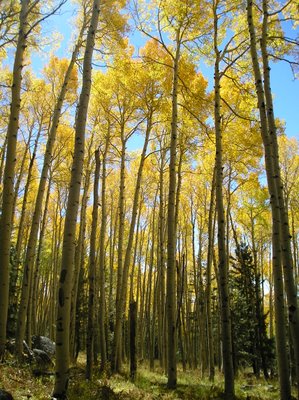
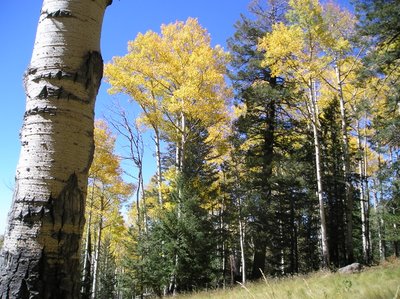
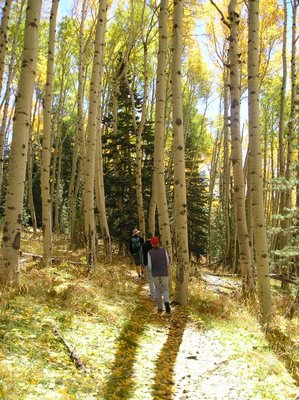
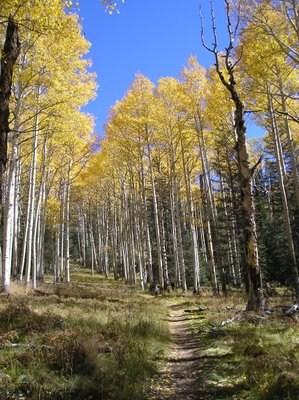
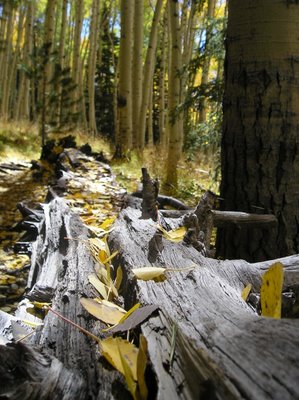
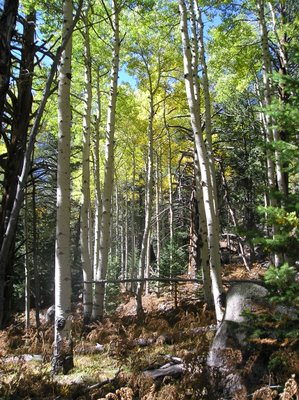
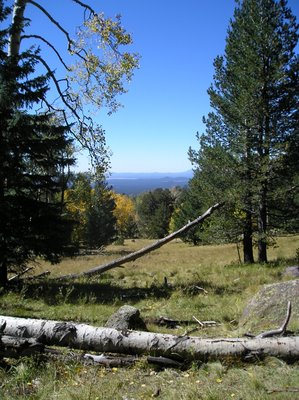
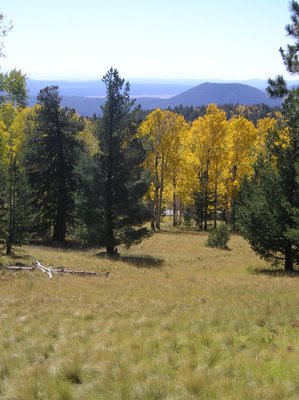
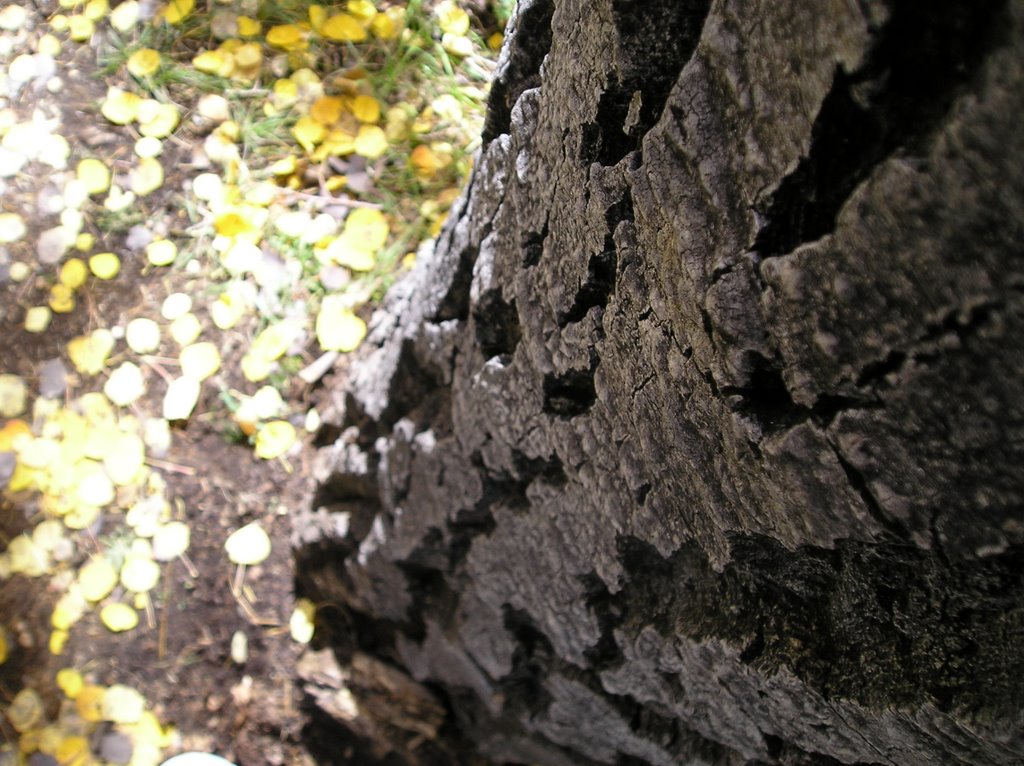
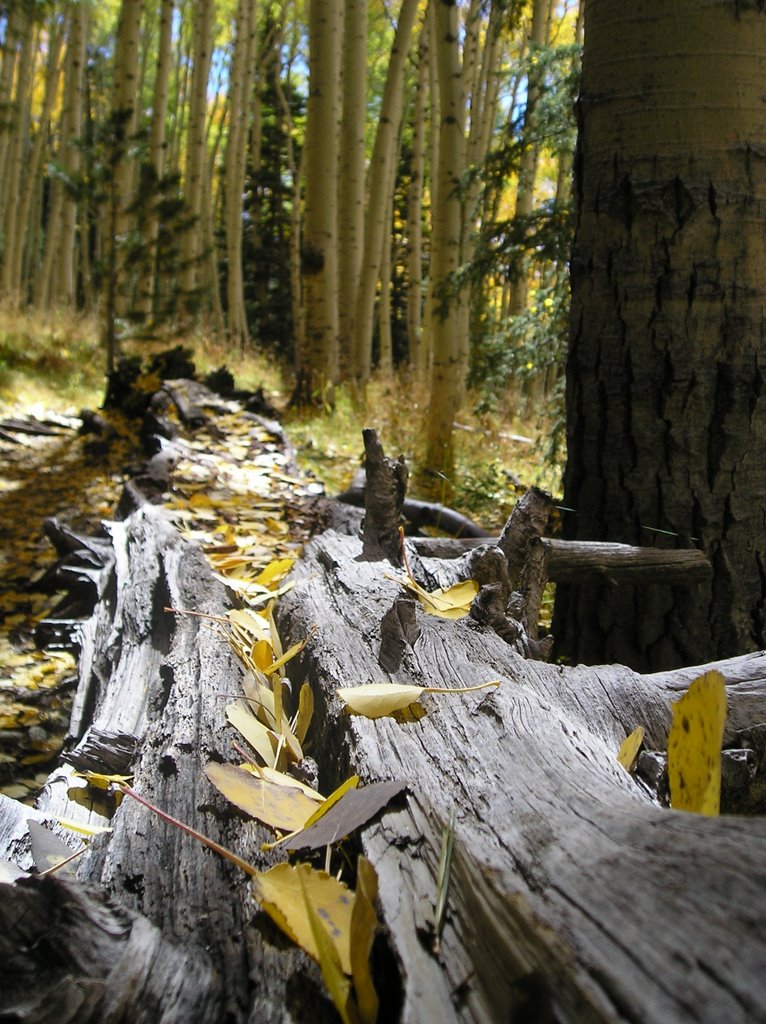
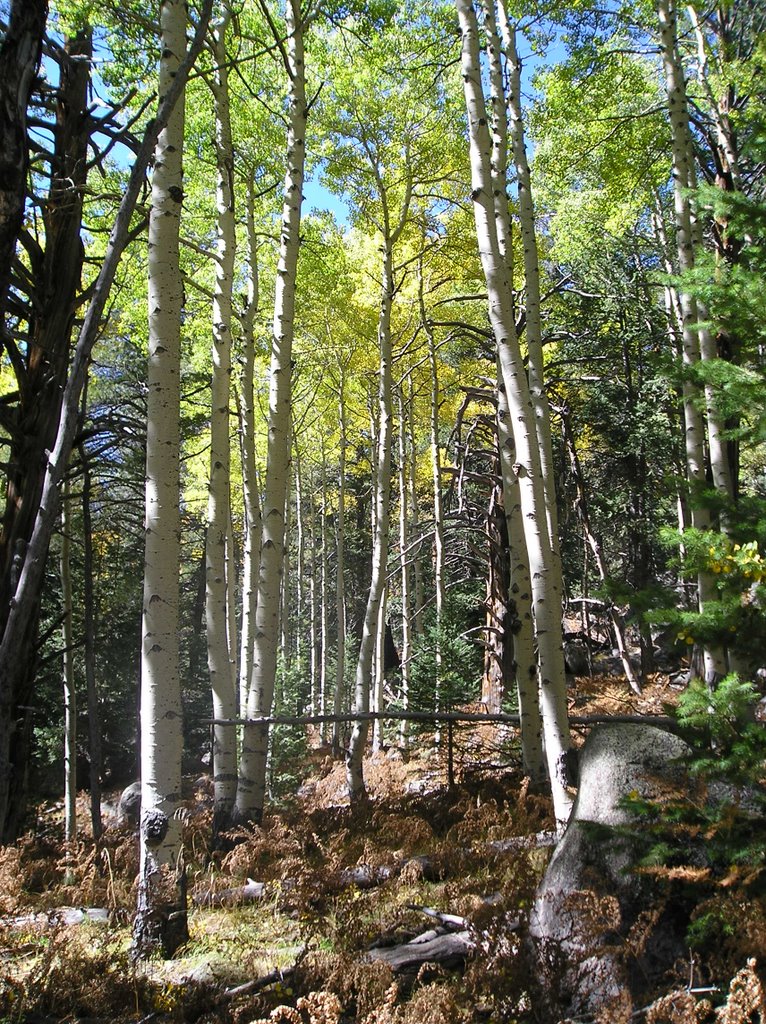
The fall colors are just about at their peak right now in Flagstaff and the city and mountain are gorgeous.
Because of our local climate (i.e. high elevation and very little precipitation), there are very few deciduous type trees that thrive here. Pondarosa pine is the most common type of tree, but the next most common is the aspen.
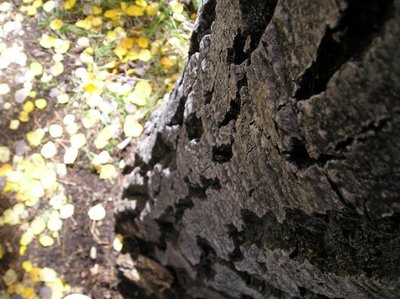
I love aspens. Not only are they very aesthetically pleasing (at least in my opinion), they also make a wonderful quaking sound when the wind rustles the leaves. Hence the name "quaking aspen", I guess. In the fall, the green leaves turn to a bright yellow color that, as the fall light filters through them, fills the forest floor with a warm, buttery light that keeps you warm even when the air is cool.
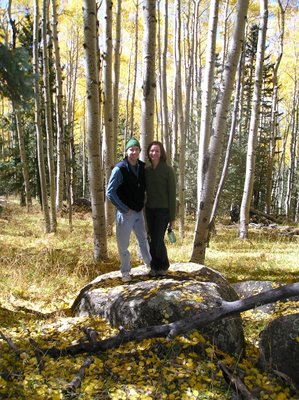
Unfortunately it won't be long until the wind and snows come, knocking the foliage to the forest floor. Luckily, we took a hike last weekend and were able to get some great pictures of the leaves. So I'll shut up now and post some pretty pictures. I hope you enjoy them.
Because of our local climate (i.e. high elevation and very little precipitation), there are very few deciduous type trees that thrive here. Pondarosa pine is the most common type of tree, but the next most common is the aspen.
I love aspens. Not only are they very aesthetically pleasing (at least in my opinion), they also make a wonderful quaking sound when the wind rustles the leaves. Hence the name "quaking aspen", I guess. In the fall, the green leaves turn to a bright yellow color that, as the fall light filters through them, fills the forest floor with a warm, buttery light that keeps you warm even when the air is cool.
Unfortunately it won't be long until the wind and snows come, knocking the foliage to the forest floor. Luckily, we took a hike last weekend and were able to get some great pictures of the leaves. So I'll shut up now and post some pretty pictures. I hope you enjoy them.






Saturday, October 14, 2006
Wet Roads, Traumas Arrive
I saw and participated in one of my first major traumas today. It was not a very uplifting experience.
The hospital I'm at for my clinicals is pretty small and most major traumas are automatically sent to Flagstaff or Phoenix since both cities have hospitals that are rated Trauma 1. But today they sent us one for reasons unknown to me.
It was an 18 year old man who had been in an MVA. The poor kid had hydroplaned on some wet asphalt slid off the road and was ejected from the car. He had head, neck and abdominal trauma and was in pretty bad shape. They called us for a stat portable chest and pelvis x-ray and would later do a CT scan of the head and neck areas.
It was amazing to watch the docs and nurses swarm around him, all of them doing their jobs with infinite efficiency. I attempted to do my part, namely x-raying the patient's chest and pelvis, in as timely manner as possible.
Upon visual inspection it was clear the kid was in pretty bad shape and once we got the CT scan there was no denying his condition. The head trauma he had sustained had caused a massive bleed in his brain and he was more than likely brain dead already.
At this point they transfered him to Flagstaff since my hospital doesn't have a very advanced neurology dept. The news of his condition hit me harder than I would have expected. I thought about how his family's life would be forever changed by the events of that day. I did my best to continue on during the day, x-raying patients and keeping a cheery demeanor with them. But I kept thinking about when the doctor would finally have to break the news to the kid's family that he was almost certainly brain dead and would most likely not survive for many more hours. How would I react if I were given the same news about my brother, mother or wife? There is no way to know how one will react until one is put into that situation and with any luck I will never have to find out how I would respond.
The hospital I'm at for my clinicals is pretty small and most major traumas are automatically sent to Flagstaff or Phoenix since both cities have hospitals that are rated Trauma 1. But today they sent us one for reasons unknown to me.
It was an 18 year old man who had been in an MVA. The poor kid had hydroplaned on some wet asphalt slid off the road and was ejected from the car. He had head, neck and abdominal trauma and was in pretty bad shape. They called us for a stat portable chest and pelvis x-ray and would later do a CT scan of the head and neck areas.
It was amazing to watch the docs and nurses swarm around him, all of them doing their jobs with infinite efficiency. I attempted to do my part, namely x-raying the patient's chest and pelvis, in as timely manner as possible.
Upon visual inspection it was clear the kid was in pretty bad shape and once we got the CT scan there was no denying his condition. The head trauma he had sustained had caused a massive bleed in his brain and he was more than likely brain dead already.
At this point they transfered him to Flagstaff since my hospital doesn't have a very advanced neurology dept. The news of his condition hit me harder than I would have expected. I thought about how his family's life would be forever changed by the events of that day. I did my best to continue on during the day, x-raying patients and keeping a cheery demeanor with them. But I kept thinking about when the doctor would finally have to break the news to the kid's family that he was almost certainly brain dead and would most likely not survive for many more hours. How would I react if I were given the same news about my brother, mother or wife? There is no way to know how one will react until one is put into that situation and with any luck I will never have to find out how I would respond.
Friday, October 06, 2006
My First "Tipping" Experience
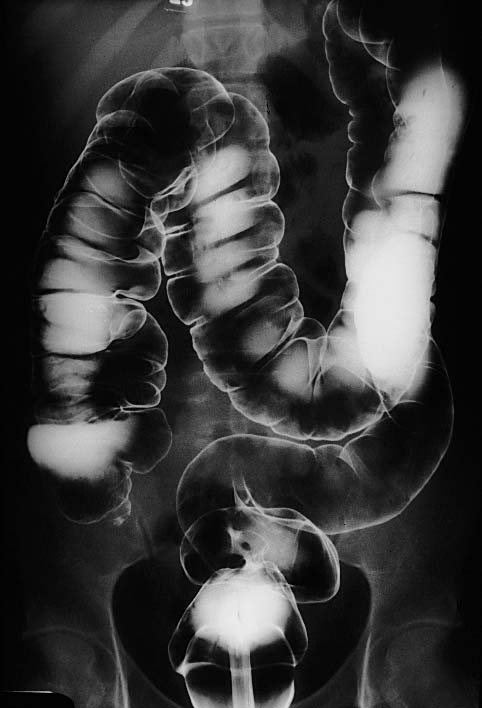
I had an interesting first experience today. One that most people will never get the opportunity to experience in their lives. I "tipped" a BE patient for the first time.
"Tipping" a patient is a nice way of saying that I inserted the tip of an enema tube into the patient's rectum and administered liquid barium sulfate into their colon. Nice huh?! I hope most of you never have to experience it.
And believe it or not the "tipping" part isn't the worst of it. In many patients the barium, and air that is added later, expands the colon and makes the patient feel like they are having horrible gas cramps. I have never had one myself, but from what the patients have been describing to me during the exam, I hope to never have to have one........or at least put off having one for many years!
BEs are often done in conjuction with or instead of a colonoscopy to look for problems in the large intestine like colon cancer, diverticula, polyps, ulcerative colitis, Crohn's disease or even appendicitis. Most of your organs are not visible on standard x-rays, so in order to visualize the colon a radiopaque material (in this case barium sulfate) is used to coat the inner lining of the large intestine and then air is injected to expand the walls so all parts of the intestine are visible on the x-ray image or under fluoro examination.
BEs are a very common exam and provide the doctors with a lot of good information about the condition of the colon.
Truthfully, I had been dreading my first experience tipping a BE patient. In school the instructors always tell horror stories about techs being pooped on by elderly patients who have not been prepped properly or of patients being unable to hold in the barium and letting loose all over the table. But so far I have not seen this and, although I am sure it happens, I don't think these problems are very common.
I guess I was most concerned with the rather intimate aspect of actually tipping the patient for the first time, but everything went well in this case. I explained to her what I was going to do and made sure she was ready before I did anything. Another tech was there to make sure I did everything correctly.
I'm actually extremely relieved that my first time is over and that it went so well. I know that they wont all go so well, but at least I can always look back and remember that my first BE tipping went smoothly.
Wednesday, October 04, 2006
Tuesday, October 03, 2006
HIV positive patient
I had my first HIV positive patient today. It was a little surreal. She didn't fit any of the stereotypes of what one might have for an HIV positive person. She was young, healthy-looking, well-spoken and polite. She seemed like your typical college-age women from anywhere in the US. She wasn't the one to tell us she was HIV positive (it was evident in her chart) and we didn't talk about it with her. All she needed done was a simple abdominal series and single view chest x-ray, so discussion of her condition was not warranted.
On a lighter note, I did my first shoulder x-ray today. Not too exciting but the pictures sure came out pretty. The shoulder is a really strange and complex joint and it's a wonder more people don't have problems with it. The patient needed both shoulders radiographed (he had been bucked off his horse a few days earlier). The tech I was with did the first one, showing me his techniques for positioning, and I positioned the patient for views of the other shoulder. Unfortunately, I couldn't comp this time because I have to do at least one exam with supervision before I can actually comp on it, but I'll be ready next time.
On a lighter note, I did my first shoulder x-ray today. Not too exciting but the pictures sure
 came out pretty. The shoulder is a really strange and complex joint and it's a wonder more people don't have problems with it. The patient needed both shoulders radiographed (he had been bucked off his horse a few days earlier). The tech I was with did the first one, showing me his techniques for positioning, and I positioned the patient for views of the other shoulder. Unfortunately, I couldn't comp this time because I have to do at least one exam with supervision before I can actually comp on it, but I'll be ready next time.
Camping trip to Lockett Meadow
Here are some pics from my wife and my camping trip to Lockett Meadow, a few miles north of Flagstaff, AZ. The meadow and hills are full of aspen and in the fall the colors are amazing. Our campsite is at about 9000 ft asl, so the nights are already pretty cold....... like 25 degrees F cold!! But we brought plenty of blankets and the fire kept us warm until we headed for the sleeping bags. It was so cool to hear the elk bugling in the distance. They kept at it for hours. My wife was sure the male was looking for a booty call! :-) Anyway, enjoy the pics.
 Our camp site
 Becky looking at the San Francisco Peaks from Lockett Meadow
 Me at a pulloff on our way to Lockett Meadow
 Becky holding an aspen leaf
 View from Lockett Meadow the morning after we camped
 Yeah...........it was frickin' cold!!!!!!
 Me contemplating the meaning of life or something just as philosophical, I'm sure ;-)
 aspen
aspen
 interesting plant
 Becky holding some aspen branches
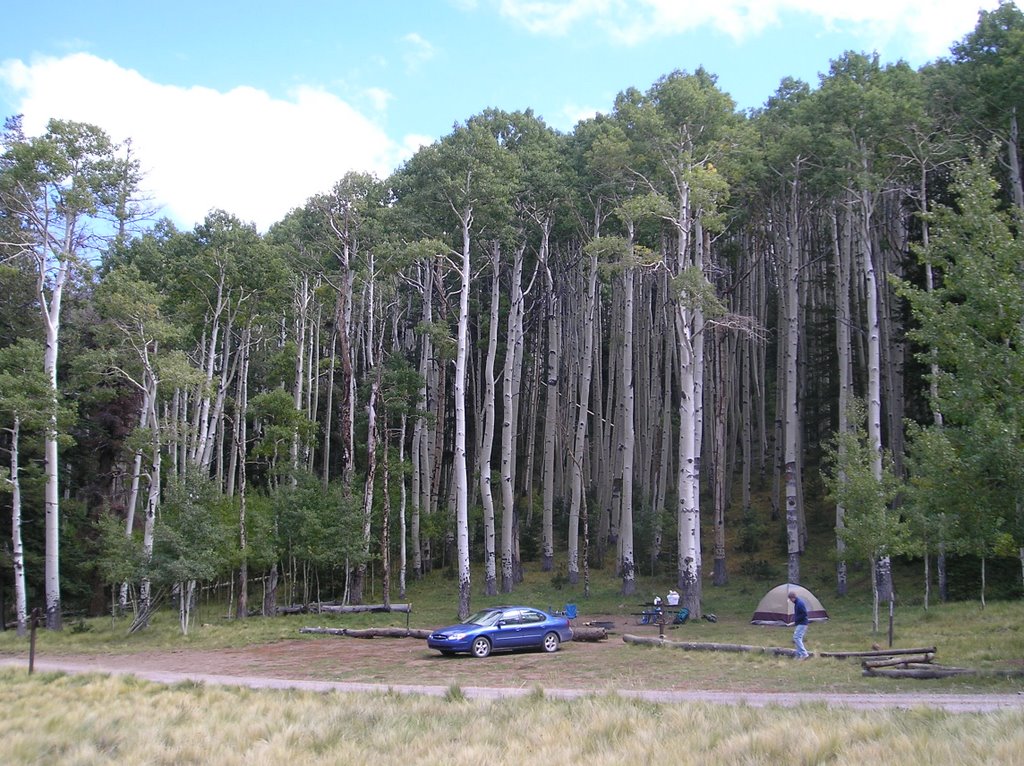 Our camp site
 Becky looking at the San Francisco Peaks from Lockett Meadow
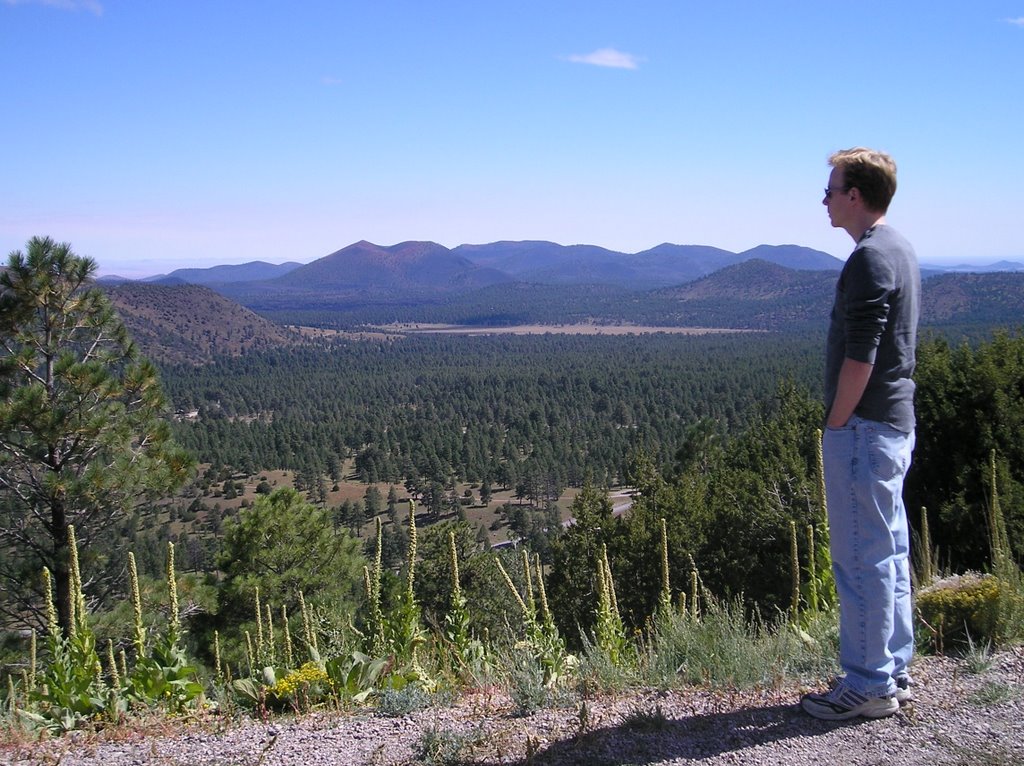 Me at a pulloff on our way to Lockett Meadow
 Becky holding an aspen leaf
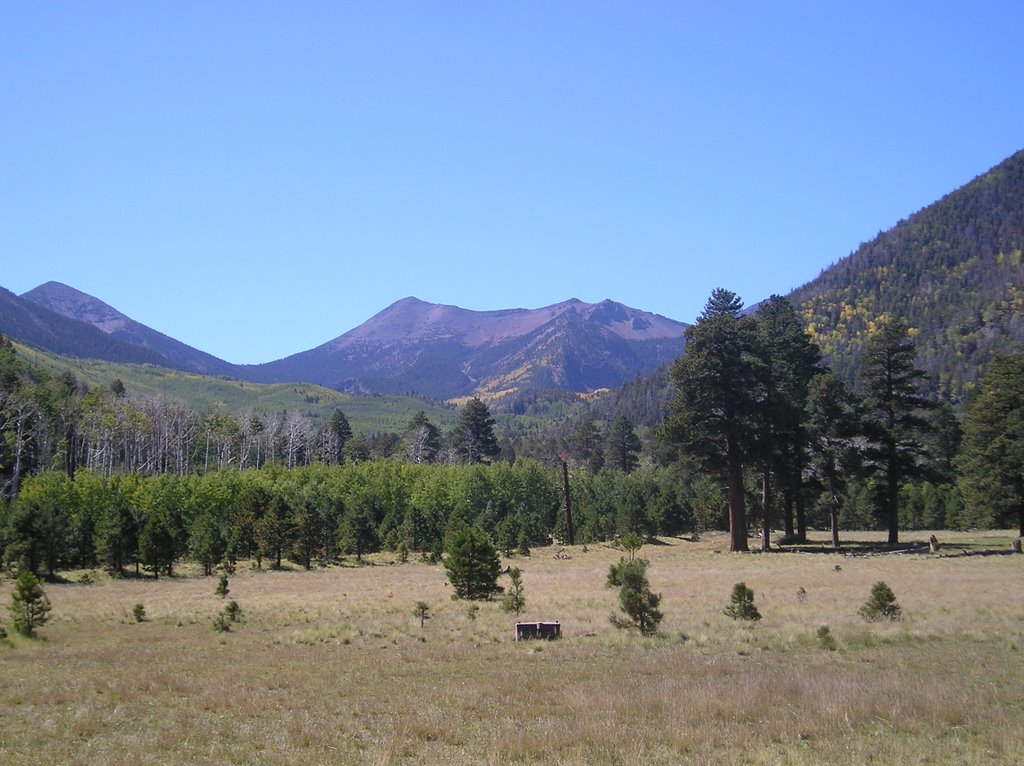 View from Lockett Meadow the morning after we camped
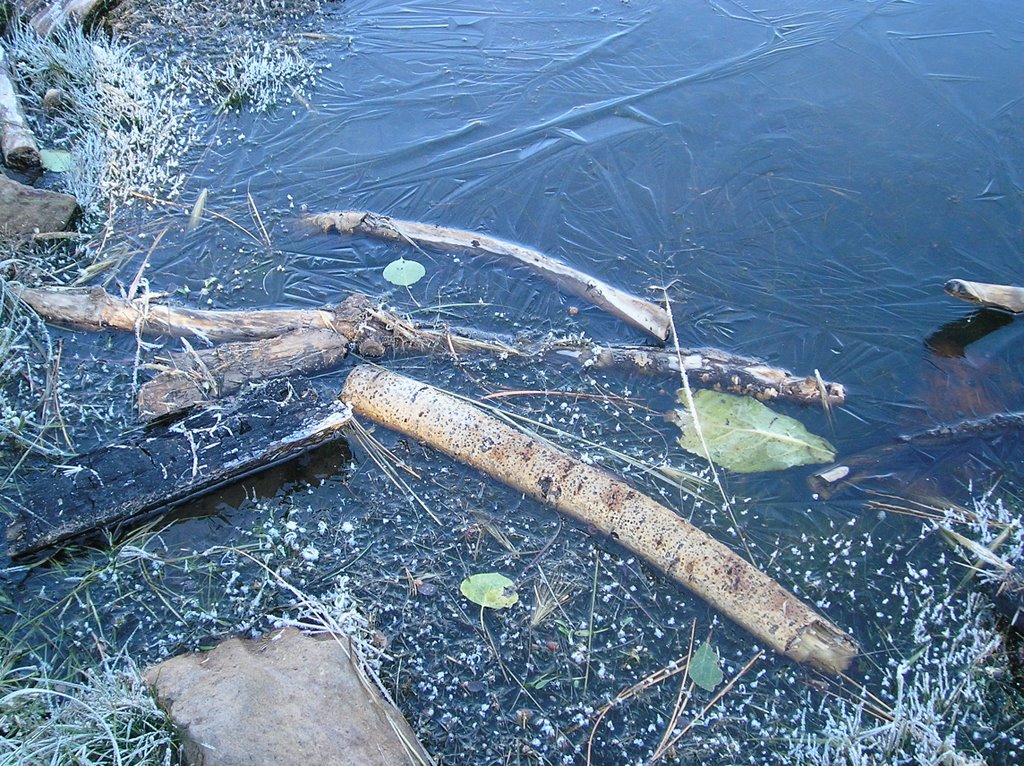 Yeah...........it was frickin' cold!!!!!!
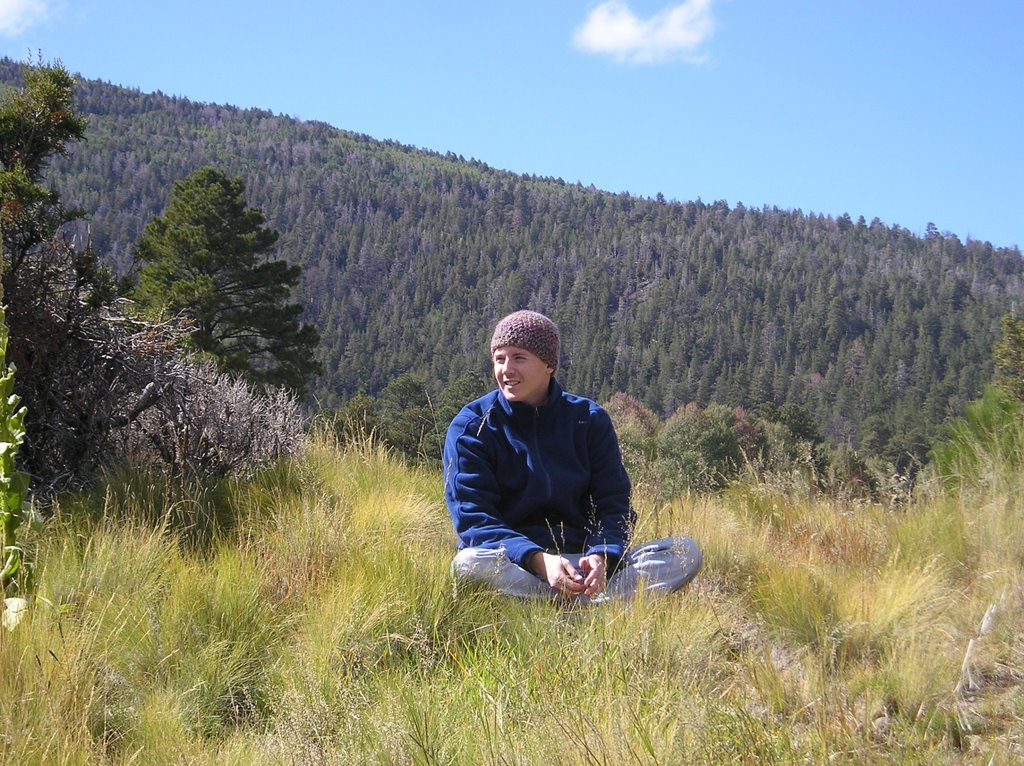 Me contemplating the meaning of life or something just as philosophical, I'm sure ;-)
 aspen
aspen interesting plant
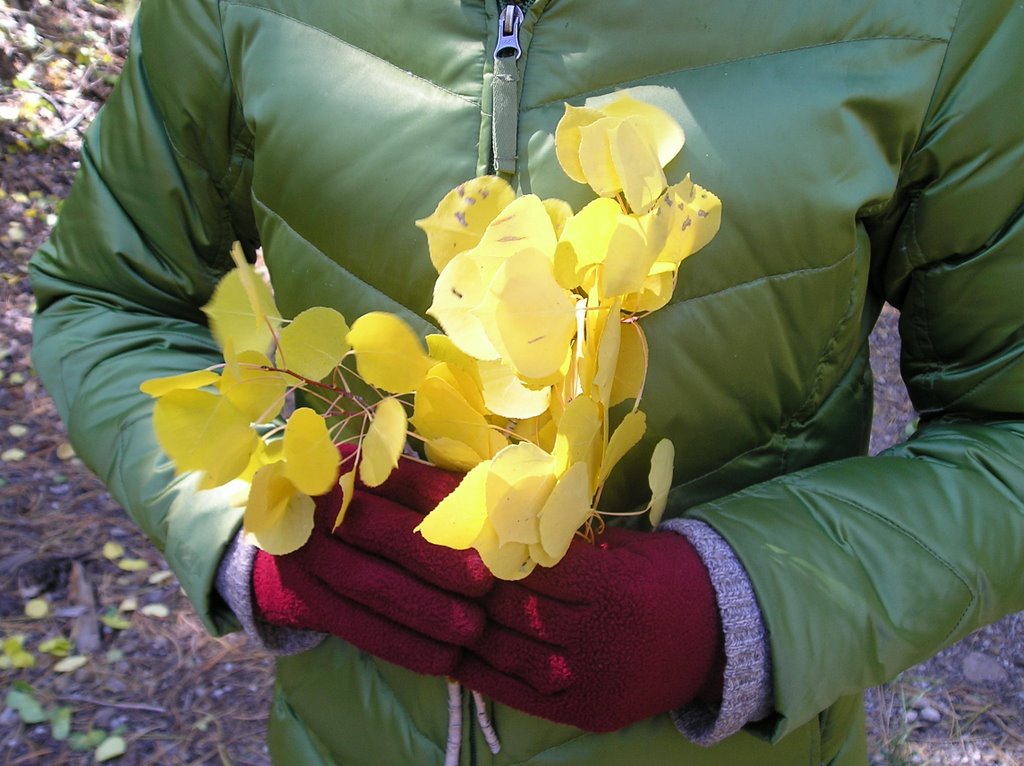 Becky holding some aspen branches
Saturday, September 30, 2006
the Good with the Bad
Working in a hospital is always interesting. You see things you would never see in other jobs. To work there, however, you must take the good with the bad. You are usually seeing people at their worst, most vulnerable point, and you have to be sensitive to that.
In the short time I've been working in the radiology department I have seen some great things, but, unfortunately, some not so great things as well.
For example, on Friday I assisted with an UGI Series on a patient who had been complaining of acid reflux and abdominal pain. During an UGI Series the patient swallows barium and we watch it pass thru their GI tract on fluoro. After we were done and the patient was changing back into their clothes, the doctor pulled me aside and showed me some of the shots he took of her stomach during the exam.
He pointed to a large, rough section of her stomach wall and explained that part of her stomach was being destroyed by cancer and could been seen on the film. Stomach cancer is one of the worst to get and metastasizes very quickly.
It was a strange and sad feeling to stand there and know that this person has cancer and probably doesn't have many more months of life left and she didn't even know it yet. Up until then I hadn't really seen too many major pathologys, just broken bones, diverticula and hiatal hernias, all of which are relatively benign compared to this patient's problem. I'm thankful that I wasn't the one to have to give her the bad news, but I'm also thankful that I was involved in diagnosing her problem, so that she may enjoy the time she has left.
Fortunately, I've also been there when patients have received good news. A couple weeks ago we had another patient in for another Upper GI series but this one also included a small bowel follow thru, where you follow the barium through the small intestine until it has reached the juncture with the large intestine.
In this patient's case, the exam was ordered because his doctor suspected the patient had a bowel obstruction, which is a simple thing in concept but can be very dangerous and life threatening for the patient. He drank the barium and we watched for over an hour (taking pics every 15 min) as it passed through his upper GI and into his small intestine. He had already had a barium enema a few days before so the doc knew that his large intestine was not blocked, so if he was obstructed it would have to be in the small intestine.
But as we watched the barium progress through his system it was clear that there was no obstruction, which meant he would not have to have emergency surgery as the doctor suspected. I still remember the look on his face as the doctor told him the news that he wouldn't have to have surgery. He was so happy and relieved I couldn't help but smile and congradulate him on the good news. It was a good moment for me and I felt lucky I could be there for it.
In the short time I've been working in the radiology department I have seen some great things, but, unfortunately, some not so great things as well.
For example, on Friday I assisted with an UGI Series on a patient who had been complaining of acid reflux and abdominal pain. During an UGI Series the patient swallows barium and we watch it pass thru their GI tract on fluoro. After we were done and the patient was changing back into their clothes, the doctor pulled me aside and showed me some of the shots he took of her stomach during the exam.
He pointed to a large, rough section of her stomach wall and explained that part of her stomach was being destroyed by cancer and could been seen on the film. Stomach cancer is one of the worst to get and metastasizes very quickly.
It was a strange and sad feeling to stand there and know that this person has cancer and probably doesn't have many more months of life left and she didn't even know it yet. Up until then I hadn't really seen too many major pathologys, just broken bones, diverticula and hiatal hernias, all of which are relatively benign compared to this patient's problem. I'm thankful that I wasn't the one to have to give her the bad news, but I'm also thankful that I was involved in diagnosing her problem, so that she may enjoy the time she has left.
Fortunately, I've also been there when patients have received good news. A couple weeks ago we had another patient in for another Upper GI series but this one also included a small bowel follow thru, where you follow the barium through the small intestine until it has reached the juncture with the large intestine.
In this patient's case, the exam was ordered because his doctor suspected the patient had a bowel obstruction, which is a simple thing in concept but can be very dangerous and life threatening for the patient. He drank the barium and we watched for over an hour (taking pics every 15 min) as it passed through his upper GI and into his small intestine. He had already had a barium enema a few days before so the doc knew that his large intestine was not blocked, so if he was obstructed it would have to be in the small intestine.
But as we watched the barium progress through his system it was clear that there was no obstruction, which meant he would not have to have emergency surgery as the doctor suspected. I still remember the look on his face as the doctor told him the news that he wouldn't have to have surgery. He was so happy and relieved I couldn't help but smile and congradulate him on the good news. It was a good moment for me and I felt lucky I could be there for it.
Wednesday, September 27, 2006
List of Stupids
Below is but a short list of things patients have done to land them in our x-ray department.
- drive an ATV drunk......and at night.
- drop a box of frozen french fries on their foot
- jump off a swing
- tried to do a "wicked cool" trick on their skateboard
- slammed their elbow in the refridgerator door
- got out of a car wearing very high heels and turned their ankle
- got a bowel obstruction (OK, so this one isnt so funny)
- wiped out pulling a wheelie on their motorcycle
- hit a light pole while driving drunk (but decided not to come in for two days!!)
- got bumped in their recently operated on elbow by a waitress
- got pneumonia (Again, not so funny)
And my all time favorite...
- they put their leg down in an attempt to stop an 800 lb. ATV going 20 mph instead of using the break.
You would think that the last one would be an isolated incident, but unfortunately it is not. It happens all the time with ATV and motorcycle riders.
So do your best to avoid doing any of the above activities because I'd rather not see YOU at the other end of my x-ray machine any time soon.
- drive an ATV drunk......and at night.
- drop a box of frozen french fries on their foot
- jump off a swing
- tried to do a "wicked cool" trick on their skateboard
- slammed their elbow in the refridgerator door
- got out of a car wearing very high heels and turned their ankle
- got a bowel obstruction (OK, so this one isnt so funny)
- wiped out pulling a wheelie on their motorcycle
- hit a light pole while driving drunk (but decided not to come in for two days!!)
- got bumped in their recently operated on elbow by a waitress
- got pneumonia (Again, not so funny)
And my all time favorite...
- they put their leg down in an attempt to stop an 800 lb. ATV going 20 mph instead of using the break.
You would think that the last one would be an isolated incident, but unfortunately it is not. It happens all the time with ATV and motorcycle riders.
So do your best to avoid doing any of the above activities because I'd rather not see YOU at the other end of my x-ray machine any time soon.
Subscribe to:
Posts (Atom)