Working in a hospital is always interesting. You see things you would never see in other jobs. To work there, however, you must take the good with the bad. You are usually seeing people at their worst, most vulnerable point, and you have to be sensitive to that.
In the short time I've been working in the radiology department I have seen some great things, but, unfortunately, some not so great things as well.
For example, on Friday I assisted with an UGI Series on a patient who had been complaining of acid reflux and abdominal pain. During an UGI Series the patient swallows barium and we watch it pass thru their GI tract on fluoro. After we were done and the patient was changing back into their clothes, the doctor pulled me aside and showed me some of the shots he took of her stomach during the exam.
He pointed to a large, rough section of her stomach wall and explained that part of her stomach was being destroyed by cancer and could been seen on the film. Stomach cancer is one of the worst to get and metastasizes very quickly.
It was a strange and sad feeling to stand there and know that this person has cancer and probably doesn't have many more months of life left and she didn't even know it yet. Up until then I hadn't really seen too many major pathologys, just broken bones, diverticula and hiatal hernias, all of which are relatively benign compared to this patient's problem. I'm thankful that I wasn't the one to have to give her the bad news, but I'm also thankful that I was involved in diagnosing her problem, so that she may enjoy the time she has left.
Fortunately, I've also been there when patients have received good news. A couple weeks ago we had another patient in for another Upper GI series but this one also included a small bowel follow thru, where you follow the barium through the small intestine until it has reached the juncture with the large intestine.
In this patient's case, the exam was ordered because his doctor suspected the patient had a bowel obstruction, which is a simple thing in concept but can be very dangerous and life threatening for the patient. He drank the barium and we watched for over an hour (taking pics every 15 min) as it passed through his upper GI and into his small intestine. He had already had a barium enema a few days before so the doc knew that his large intestine was not blocked, so if he was obstructed it would have to be in the small intestine.
But as we watched the barium progress through his system it was clear that there was no obstruction, which meant he would not have to have emergency surgery as the doctor suspected. I still remember the look on his face as the doctor told him the news that he wouldn't have to have surgery. He was so happy and relieved I couldn't help but smile and congradulate him on the good news. It was a good moment for me and I felt lucky I could be there for it.
Saturday, September 30, 2006


Wednesday, September 27, 2006
List of Stupids
Below is but a short list of things patients have done to land them in our x-ray department.
- drive an ATV drunk......and at night.
- drop a box of frozen french fries on their foot
- jump off a swing
- tried to do a "wicked cool" trick on their skateboard
- slammed their elbow in the refridgerator door
- got out of a car wearing very high heels and turned their ankle
- got a bowel obstruction (OK, so this one isnt so funny)
- wiped out pulling a wheelie on their motorcycle
- hit a light pole while driving drunk (but decided not to come in for two days!!)
- got bumped in their recently operated on elbow by a waitress
- got pneumonia (Again, not so funny)
And my all time favorite...
- they put their leg down in an attempt to stop an 800 lb. ATV going 20 mph instead of using the break.
You would think that the last one would be an isolated incident, but unfortunately it is not. It happens all the time with ATV and motorcycle riders.
So do your best to avoid doing any of the above activities because I'd rather not see YOU at the other end of my x-ray machine any time soon.
- drive an ATV drunk......and at night.
- drop a box of frozen french fries on their foot
- jump off a swing
- tried to do a "wicked cool" trick on their skateboard
- slammed their elbow in the refridgerator door
- got out of a car wearing very high heels and turned their ankle
- got a bowel obstruction (OK, so this one isnt so funny)
- wiped out pulling a wheelie on their motorcycle
- hit a light pole while driving drunk (but decided not to come in for two days!!)
- got bumped in their recently operated on elbow by a waitress
- got pneumonia (Again, not so funny)
And my all time favorite...
- they put their leg down in an attempt to stop an 800 lb. ATV going 20 mph instead of using the break.
You would think that the last one would be an isolated incident, but unfortunately it is not. It happens all the time with ATV and motorcycle riders.
So do your best to avoid doing any of the above activities because I'd rather not see YOU at the other end of my x-ray machine any time soon.
Friday, September 22, 2006
Apologies
 I apologize for the lack of postings the last few weeks. The truth is I'm still pretty exhausted when I get home from clinicals at the end of the day and find it hard to form a complete, coherent thought much less attempt to compose a witty and entertaining post. Not that I have ever been successful at that in the past! :-P
 Unfortunately, I no longer have the big, healthy doses of spare time I used to have while I was living in Phoenix and only going to classes. I now have to use what little free time I have for doing housework, running errands, spending time with my wife and the all important job of entertaining the cat.
I know, excuses, excuses, excuses. I don't mean to justify my relative absence to the blogosphere, but there are some good reasons I have not been around. I hope my loyal readers will not lose faith in me and go off in search of greener and more frequently updated pastures, and I hope my new readers, especially those of the rad tech student persuasion (you know who you are) will continue to check my site for my not-so-witty, not-so-entertaining updates. ;-)
And now, as I see the spaghetti water is finally boiling, I must bid you all a fond adieu. Enjoy the weekend and please do check back from time-to-time for updates on the life and times of X-ray Tech Student (Formerly) in Phoenix.
Tuesday, September 12, 2006
Poor Little Guy
 "Oowwww!!! Why are you hurting me!!?!?" he screamed in my face. "I'm sorry 'Jimmy'*, I know it hurts. Just be as brave as you can and we'll be done soon, OK?" I replied.
'Jimmy', the poor little guy, had fallen off a swing at the park and broken his wrist. How did I know it was broken? Well, it looked something like this. So, although I'm no doctor, it was pretty safe to say it was broken.

His parents brought him into the ED about 30 minutes earlier and the doc had ordered a stat 2 view order for his wrist, and with good reason. So I and another tech hurried to the ED to take the x-rays, develope them and get them back to the doc as soon as we could. 'Jimmy's' parents and the other tech positioned his arm, while I got the portable x-ray unit in position. We needed a PA and Lateral view of the wrist, so poor 'Jimmy' had to endure the pain as we switched cassettes in between x-rays.
Being seven isn't easy, but being seven with a severaly broken wrist really isn't easy. But he was brave and put up with our manipulation of his injuried limb with much less protest than I would have thought.
Once back in the rad dept, we developed the images and took a look at them to make sure the density and contrast was right and all pertinent body parts were in view. From looking at the image it was apparent that 'Jimmy" had sustained some major trauma to his wrist. He had broken his distal ulna and radius just below the head, and the bones had displaced and were no longer in line, hence the gruesome look of his arm.

It was a difficult situation. You're torn between getting a quality image that will give the doctor all the information he needs about the injury, but at the same time you absolutely don't want to cause any more pain to the pt, in this case a child, than is necessary. Overall, the tech did a great job comforting the pt and his parents who were visibly upset. I just hope that with time and "practice" I will be competent enough to do as good a job as this tech did.
*all names have been changed to protect patient privacy.
Saturday, September 09, 2006
Battlefield Radiography
The above is a video produced during the 1940s about a new technology used to treat wounded soldiers on the battlefield. It seems to be similar to a mobile fluoro unit or C-arm that is used today in surgery.
Notice that neither the patient nor the doctors have shielding of any kind and are probably receiving very high doses of radiation. Oh how times have changed.
The above is a video produced during the 1940s about a new technology used to treat wounded soldiers on the battlefield. It seems to be similar to a mobile fluoro unit or C-arm that is used today in surgery.
Notice that neither the patient nor the doctors have shielding of any kind and are probably receiving very high doses of radiation. Oh how times have changed.
Thursday, September 07, 2006
Surgery
 Today I had my first experience in surgery.
I wasn't in the door two seconds and L grabbed me and we were on our way to assist in surgery. The docs were doing a hip pinning and needed fluoro guidance.
We made our way up to the OR and went into the surgical prep room. L handed me a long white, paper suit, and told me to put it on. "We always have to wear the bunny suit in surgery" she tells me. "Ha ha" I thought, "lets make fun of the newbie student and dress him up all stupid-like." But as I watched she pulled one out for herself and started putting it on. "OK, fine" I thought "I'll put it on if she has one too. How stupid could I look, right?" Well, as it turns out pretty stupid, but at least I wasn't only one.

After that we made our way to OR Room 3 where the docs had already prepped the pt for a hip pinning. This is where they insert a few metal pins, although bolts is more accurate, into a bone to reinforce it. They needed us, or rather L, to run the fluoro machine so they could correctly position the pins in the pt's hip.
The mobile fluoro machine, more commonly called a C-arm, is a type of x-ray machine that creates real-time images. Instead of producing x-ray "snapshots" like a regular x-ray machine, it uses x-rays and a special sensor to send a live, moving picture of the patient's bones and/or organs to a TV screen. This allows the doc to see precisely where he or she has positioned the pins.

It was very interesting and I'm looking forward to getting back in there again soon. It's a bit intimidating, however, and I am already dreading the day I screw something up and get chewed out by the surgeon, but I think it will also be an amazing experience.
Wednesday, September 06, 2006
First Two Weeks
 Wow, folks. I really apologize for the relative scarcity of posts lately. Not that there are thousands out there hanging on my every word, but I know some people like to check out this blog on a somewhat regular basis and I hope I don't lose those readers. You know who you are! ;-)
 Anyway, the past two weeks have been my first two weeks of clinicals in radiography. For those of you who have done clinicals, you know the first few weeks are the most challenging. Everything is new to you, there are about a million things to learn and more is expected of you than you think can be done in a lifetime. But so far I'm surviving and keeping my head above water, well most of it anyway. My chin and mouth sink below the waves from time to time.
At this hospital the Out-patient radiology dept is separate from the in-patient radiology dept. In fact they are on opposite sides of the hospital from each other. I spent my first week in the out-patient dept and was paired up with another rad tech. Let's call her L, for anonymity's sake. The out-patient dept is relatively slow I came to find out, although it didn't seem that way to me at first. In out-patient we do rather routine examinations like chest x-rays and x-rays of the spine, extremities and ribs, as well as mammography and DEXA scans (bone density scans). These are exams that are not emergent, don't require complex equipment or doctors and very little, if any, prep is needed on the part of the patient.
I was able to observe and take part in several exams. My first couple were for the L-spine, the pelvis and hip, the wrist and the foot and lots and lots and lots of chest x-rays. Chest x-rays are so common, in fact, that they have a room entirely dedicated to doing just chest x-rays. Chest x-rays are ordered for anything from shortness of breath (SOB) to pneumonia to suspected fluid in the lung. Luckily this is a fairly simple exam and I have already done several myself, with tech supervision of course. I suspect that a routine chest x-ray will be the first exam I "comp" on. (comp = competency, doing the entire exam successfully myself with no corrections from the supervising tech).
This week was different however, in that I wound up in the in-patient dept.
 Which means a whole new batch of procedures and exams to learn, and learn quickly. Luckily they partnered me up with L again (most of the time) and she is a fantastic teacher. She has only been a tech for 3 years, which helps because she remembers how overwhelming everything can be at first and how much there is to learn and how little time there is to learn it.
In the in-patient dept they take care of all the other imaging exams that the out-patient dept doesnt. This includes all exams ordered for pts (patients) in the ED (Emergency Dept), those staying in the hospital, the maternity ward, and the OR. They do procedures that require fluoroscopy and the portable x-ray unit, and procedures that are more "invasive" like BEs, UGIs, esophograms and IVPs. Nuclear medicine, CT, MR and ultrasound are also assocated with this dept, however, specially trained techs do those procedures.
I'm finding out that it's all a very complex operation and there are about a million little details to get right for everything to turn out correctly. I have seen and learned a lot in the 2 short weeks I've been at clinicals, but I still have a long road ahead of me. I hope I can make it. Wish me luck.
Tuesday, August 29, 2006
I Survived My First Day of Clinicals!!!!
OK, sorry for the lack of posts the last few weeks, but I have been BIZZZZAYYY! Finals week drained me, but I survived. Then I had a week of vacation and my parents came into town for a few days and then all four of us (me, wife, mom and dad) drove out to San Francisco to visit my brother and his girlfriend. We had a great time and I will post some pics from our trip soon, I promise.
Then I got back and promptly returned to class, but luckily only on Monday. Then came today, my official first day of clinicals. Overall, it was a good day. I spent most of it getting oriented to the hospital, filling out paper work, meeting people in the dept and trying to find the cafeteria come lunch time. However, towards the end of the day I was able to assist another tech with x-raying two patients before the end of my shift came. Easy films, just a pelvis/hip and L-spine, but still a good first experience. The highlight was when one of the patients thanked me for helping her onto the table, the lowlight was when an old man coughed on the top of my head when I was helping to take off his pants. Oh well, I'll duck next time!
It's strange. I didnt really do much today in the way of seeing patients, but I'm still exhausted. Therefore, I don't have much to say right now. But stay tuned, I will do an update post this weekend and let you know how my first whole week at clinicals went. Wish me luck.
Then I got back and promptly returned to class, but luckily only on Monday. Then came today, my official first day of clinicals. Overall, it was a good day. I spent most of it getting oriented to the hospital, filling out paper work, meeting people in the dept and trying to find the cafeteria come lunch time. However, towards the end of the day I was able to assist another tech with x-raying two patients before the end of my shift came. Easy films, just a pelvis/hip and L-spine, but still a good first experience. The highlight was when one of the patients thanked me for helping her onto the table, the lowlight was when an old man coughed on the top of my head when I was helping to take off his pants. Oh well, I'll duck next time!
It's strange. I didnt really do much today in the way of seeing patients, but I'm still exhausted. Therefore, I don't have much to say right now. But stay tuned, I will do an update post this weekend and let you know how my first whole week at clinicals went. Wish me luck.
Monday, August 28, 2006
Wednesday, August 16, 2006
US lags
Ignorance is bliss.........for the ignorant. For the rest of us, it's just embarrassing.
Wow, one above Turkey. What an accomplishment. ugghhh!
Wow, one above Turkey. What an accomplishment. ugghhh!
Tuesday, August 15, 2006
Virtual Surgery
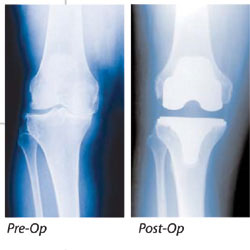 Forget going to school for 12 years to become a doctor, who has the time?! Now YOU, yes YOU, can perform a complete knee replacement right in the comfort of your own home. Just click here to get started!
Monday, August 14, 2006
Clinical Site Visit
I took a tour of my clinical site on Friday. It seems like a nice place. Not terribly huge but busy none the less. I also met my clinical instructor, who seems nice. It didn't fill me with complete confidence when I heard she has never had a student before and also just started working at this hospital a few months ago, but she seems to know her stuff and has been appointed as interim director of the dept until they can hire a full time director, so she must have a lot of experience under her belt.
Pros
- good shift: 8am-430pm Tu-F
- medium size hospital
- friendly staff in rad dept (seems to be so far, anyway)
- experienced clinical instructor
- meal vouchers for students (YES, free food!)
- I will be able to experience several modalities (CT, MR, Ultrasound, Nuc Med, etc.)
Cons
- they still use film, no CR or DR, ugh!
- it's a one hour drive (65 miles) from my house in Flag, which I will have to drive twice a day, 4 days a week for 8 months
- outpatient rad is separate from in-patient rad dept.
- clinical instructor has not had a student before
These are some of the apparent pros and cons of my site, but I'm sure I will find more when I start clinicals in a few weeks. Notice there are more pros than cons, and the cons that are there I can certainly live with.
In other news, this morning I took my first final exam of this semester. It was the written exam in my positioning class. I blasted through it and only had a few answers I wasn't 100% sure of. And thanks to the power of the interweb, I already know my grade and I got 100%, 0 wrong. Not too bad. But then again, I studied my butt off last week, so it's not like I didn't earn it. It's nice to have it over with though and even nicer to know I aced it! We have our lab competencies tomorrow for positioning, in which we get 3 positions at random (out of the over 60 we learned this semester) and have to demonstrate them for the instructor. I think I'm ready but just to make sure I plan to spend a few hours going over all of them at the coffee shop (the perfect study environment, at least for me) later today.
Pros
- good shift: 8am-430pm Tu-F
- medium size hospital
- friendly staff in rad dept (seems to be so far, anyway)
- experienced clinical instructor
- meal vouchers for students (YES, free food!)
- I will be able to experience several modalities (CT, MR, Ultrasound, Nuc Med, etc.)
Cons
- they still use film, no CR or DR, ugh!
- it's a one hour drive (65 miles) from my house in Flag, which I will have to drive twice a day, 4 days a week for 8 months
- outpatient rad is separate from in-patient rad dept.
- clinical instructor has not had a student before
These are some of the apparent pros and cons of my site, but I'm sure I will find more when I start clinicals in a few weeks. Notice there are more pros than cons, and the cons that are there I can certainly live with.
In other news, this morning I took my first final exam of this semester. It was the written exam in my positioning class. I blasted through it and only had a few answers I wasn't 100% sure of. And thanks to the power of the interweb, I already know my grade and I got 100%, 0 wrong. Not too bad. But then again, I studied my butt off last week, so it's not like I didn't earn it. It's nice to have it over with though and even nicer to know I aced it! We have our lab competencies tomorrow for positioning, in which we get 3 positions at random (out of the over 60 we learned this semester) and have to demonstrate them for the instructor. I think I'm ready but just to make sure I plan to spend a few hours going over all of them at the coffee shop (the perfect study environment, at least for me) later today.
Monday, August 07, 2006
ATV + 12 pack + 3am = Pain & Suffering
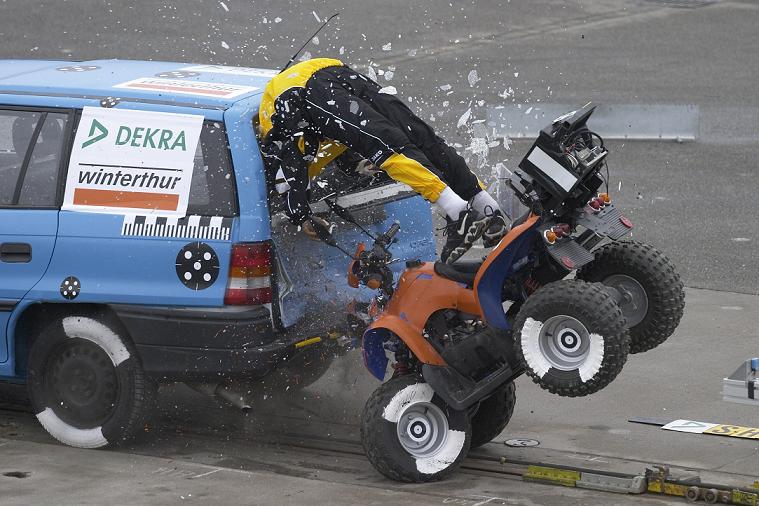 Below is a quote from an email I got from my wife, a nurse on an orthopedic floor of the hospital:
"Last night work kind of sucked. My patients were all nice, but I swear, the hallway I had was road rash alley. My patients were all males, between the ages of 27 and 39 and one was an ATV accident, 2 MVAs and the last guy was a bike vs. car, and he was the bike. He was hit from behind by a drunk driver going approx. 55 mph. Lucky to be alive. So they were all nice but my god, the dressing changes and pain medication, it just never ended. And just a fun fact: the ATV guy just had a birthday the previous night and decided to drink a 12-pack, get on his ATV at 3:00 in the morning, and of course crashed. Man, we were still picking pieces of glass and gravel out of him. Yuck. So just remember, DON'T drink your 12 pack and then ride your ATV, ok? I know it sounds crazy, but it isn't a good idea."
Thankfully she still has a sense of humor after seeing so much pain and injury. It never ceases to amaze me the patients she gets. They sure do make for interesting talk over dinner at the end of the day.
Subscribe to:
Posts (Atom)